
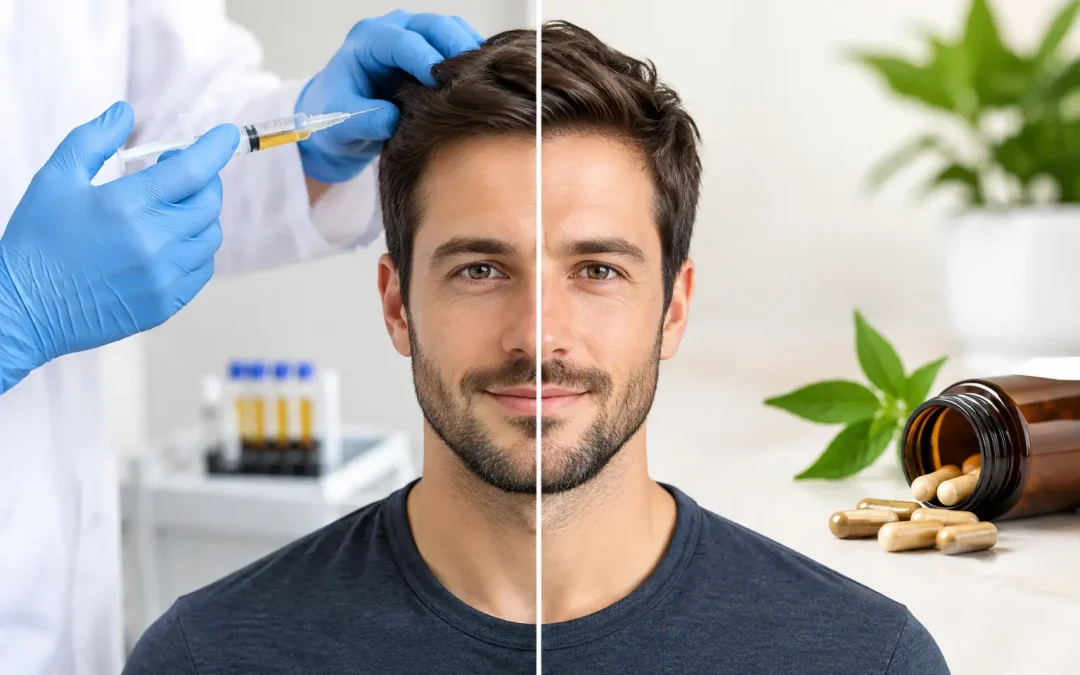
A widening part, more hair in the shower drain, or a ponytail that suddenly feels thinner can be deeply personal. When comparing PRP vs hair supplements, the best choice is rarely about finding a single miracle solution. It is about understanding why your hair is changing and choosing care that fits your health history, pattern of loss, goals, and comfort level.
Both options may have a place in a hair wellness plan, but they work very differently. PRP is an in-office treatment that uses components of your own blood to support the scalp and hair follicles. Supplements are oral products intended to address nutritional gaps or provide ingredients associated with hair health. Knowing the distinction can help you spend your time and money more confidently.
PRP vs Hair Supplements: The Key Difference
Platelet-rich plasma, or PRP, begins with a small blood draw. The blood is processed to concentrate platelets, which contain growth factors involved in the body’s natural repair processes. A trained provider then places the PRP into targeted areas of the scalp through a series of small injections.
The goal is to create a healthier environment around follicles that are still active but producing finer, weaker hairs. PRP is most often considered for early thinning, hereditary pattern hair loss, or shedding that has left the hair looking less dense. It is not a way to revive follicles that have been inactive for many years, which is why timing and an accurate assessment matter.
Hair supplements work from the inside out, at least in theory. They may contain nutrients such as iron, vitamin D, zinc, biotin, protein-related amino acids, or botanical ingredients. If a person has a genuine deficiency contributing to shedding, correcting it may support healthier hair growth. But taking high-dose vitamins without a known need is not automatically helpful, and more is not always better.
In short, PRP is a localized, provider-administered treatment focused on the scalp. Supplements are a broader nutritional approach that may be useful when diet, absorption, stress, hormonal changes, or nutrient levels are part of the picture.
When PRP May Be the Better Fit
PRP can be appealing for clients who want a targeted, non-surgical option and prefer not to rely on a daily pill alone. Because the treatment uses your own plasma, there is no synthetic filler or medication being placed in the scalp. Most appointments are relatively quick, and there is typically little downtime beyond temporary tenderness, redness, swelling, or mild bruising.
Results take patience. Hair grows in cycles, so early changes may be subtle: less shedding, improved texture, or small new hairs around the hairline. Many people need an initial series of treatments followed by maintenance sessions, depending on their response and the cause of their thinning. A provider can recommend a schedule after evaluating the scalp and discussing expectations.
PRP is often most helpful when follicles are weakened rather than permanently lost. If your concern is a gradual widening part, diffuse thinning around the crown, or a receding hairline in its earlier stages, a consultation may help determine whether you are a candidate.
When Hair Supplements May Make Sense
Supplements can be a reasonable addition when there is evidence that your body needs nutritional support. Restrictive dieting, rapid weight loss, digestive conditions, heavy menstrual periods, postpartum changes, certain medications, and periods of significant stress can all affect hair shedding. A balanced diet and medically appropriate laboratory testing can provide more useful direction than choosing a supplement based on a promising label.
For example, low iron or vitamin D may be relevant for some people, while others may be getting plenty through food already. Biotin is widely marketed for hair, but deficiency is uncommon, and high doses can interfere with certain lab tests. That is one reason it is wise to tell your medical provider about every vitamin and supplement you take.
Supplements also cannot reliably overcome every type of hair loss. Genetic thinning, autoimmune-related hair loss, thyroid concerns, scalp inflammation, and hormone-related changes may require a different approach. A quality supplement may support overall wellness, but it should not delay an evaluation when shedding is sudden, patchy, painful, or accompanied by scalp changes.
Can You Combine PRP and Supplements?
Often, yes. PRP and supplements do not have to be competing choices. If PRP supports the scalp locally and a targeted supplement addresses a documented nutritional need, the two may complement one another. The important word is targeted.
A personalized plan may also include changes outside the treatment room, such as eating enough protein, managing stress, treating dandruff or scalp irritation, avoiding overly tight hairstyles, and being gentle with heat and chemical processing. If hormone shifts or a medical condition are suspected, addressing the underlying issue is a meaningful part of protecting long-term hair health.
At A Younger You Med Spa, a thoughtful consultation starts with listening. When did the shedding begin? Is it gradual or sudden? Are there recent health, diet, medication, weight, or hormonal changes? Looking at the full picture helps avoid a one-size-fits-all recommendation.
What to Expect From a PRP Hair Consultation
A hair consultation should feel informative, not pressured. Your provider will review your health history, current medications, supplements, and goals. They may examine the pattern of thinning and discuss whether PRP aligns with what they see.
Be prepared to talk honestly about your expectations. PRP may improve the appearance of density and support stronger growth in appropriate candidates, but it does not promise a full return to the hair you had decades ago. Transparent expectations are part of good care.
Your provider may also recommend speaking with your primary care clinician or a dermatologist, especially if hair loss is abrupt, patchy, associated with itching or scaling, or accompanied by fatigue, menstrual changes, or other symptoms. Those details can point to conditions that deserve medical attention beyond aesthetic treatment.
Cost, Commitment, and Comfort Matter Too
The practical differences between PRP vs hair supplements are significant. Supplements are generally less expensive upfront and easy to purchase, but they require daily consistency and may offer limited value if there is no deficiency to correct. Quality varies widely, and marketing claims can be much stronger than the evidence behind a product.
PRP requires a larger upfront investment and in-office appointments. It also involves injections, which may not be right for everyone. For those who are comfortable with treatment and have active follicles that may respond, the targeted nature of PRP can make it a worthwhile option.
Neither choice should be based on price alone. Consider the likely cause of your thinning, how long it has been happening, what level of commitment feels realistic, and whether the recommendation is guided by a qualified medical professional.
A More Confident Next Step
Hair changes can affect how you feel when you look in the mirror, and you deserve clear answers rather than guesswork. Whether PRP, nutritional support, or a combined plan is appropriate, the most helpful next step is a personalized assessment that respects both your goals and your health. Early attention can give you more options and a clearer path toward healthier-looking hair over time.