
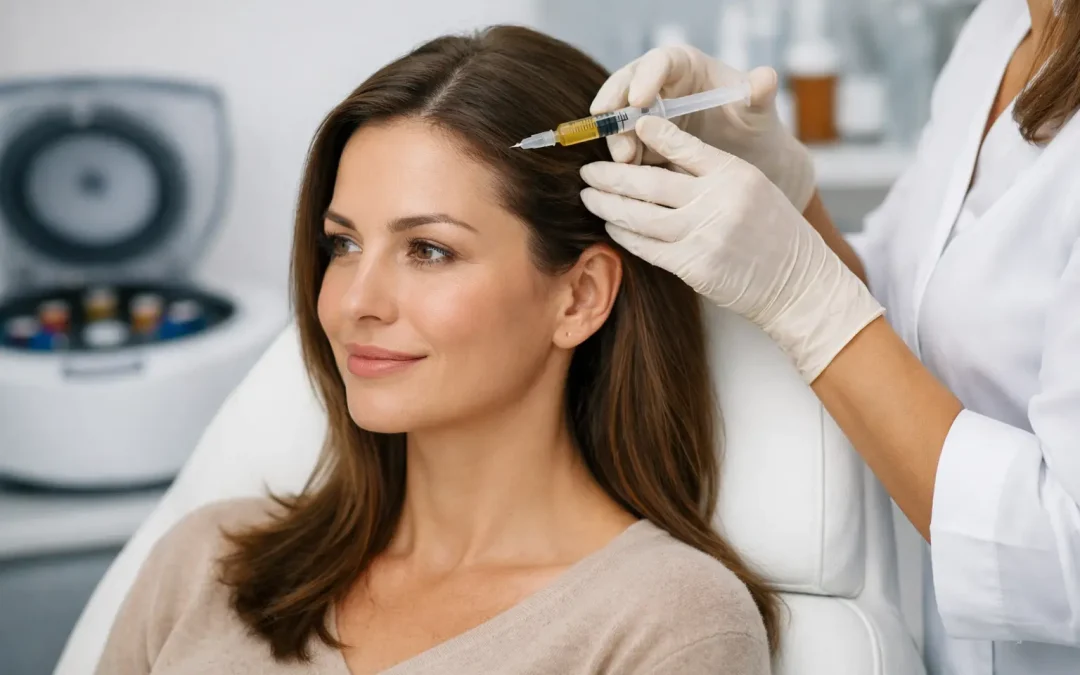
Seeing more hair in the shower drain or noticing that your part looks wider can feel deeply personal. For many women, hair thinning is not simply a cosmetic concern. It can affect how comfortable you feel in photos, at work, and in everyday moments when you want to look like yourself. PRP hair restoration for women offers a nonsurgical option designed to support healthier-looking, fuller hair using components from your own blood.
At A Younger You Med Spa, we believe you deserve clear answers, thoughtful guidance, and recommendations that fit your goals. PRP is not a one-size-fits-all answer to every type of hair loss, but for the right candidate, it can be a valuable part of a personalized hair-restoration plan.
What Is PRP Hair Restoration?
PRP stands for platelet-rich plasma. Platelets are naturally found in your blood and contain growth factors that play a role in the body’s healing and tissue-support processes. During a PRP treatment, a small amount of blood is drawn, much like routine lab work. It is then placed in a centrifuge, which separates and concentrates the platelet-rich plasma.
That concentrated plasma is carefully administered into areas of the scalp where thinning is present. The goal is to support dormant or weakened hair follicles and create a healthier environment for hair growth. Because the PRP comes from your own body, it is a treatment that appeals to women who want a natural, minimally invasive approach without surgery or a long recovery period.
PRP does not create new follicles where none exist. Instead, it is intended to help existing follicles function more effectively. That distinction matters when setting realistic expectations.
Why Women Experience Hair Thinning
Hair loss in women has many possible causes. Some women notice gradual thinning around the part line or crown due to hereditary female-pattern hair loss. Others experience increased shedding after a stressful event, illness, surgery, rapid weight change, childbirth, or a significant hormonal shift.
Thyroid conditions, low iron levels, nutritional deficiencies, certain medications, autoimmune concerns, and scalp inflammation can also contribute. Tight hairstyles and repeated chemical or heat damage may add stress to fragile hair, although they are not the only explanation for thinning.
This is why a personal consultation is so valuable. Before choosing PRP, your provider should discuss your health history, the pattern and timing of your hair loss, medications, and any recent changes that could be involved. In some cases, lab work or evaluation by your primary care provider or a dermatologist may be the appropriate first step. Treating an underlying concern may be just as important as treating the scalp itself.
Who May Be a Good Candidate for PRP Hair Restoration for Women?
Women often see the most encouraging potential from PRP when thinning is relatively early and follicles are still present. If you can see more scalp than you used to but continue to have fine or miniaturized hairs in the area, PRP may be worth discussing. It can also be considered for women who want to complement a provider-recommended topical or oral hair-loss plan.
Your candidacy depends on more than the amount of shedding. Overall health, blood conditions, active scalp infections, pregnancy status, medications that affect clotting, and the cause of hair loss all matter. Women with completely smooth areas of long-standing hair loss may need a different strategy, because PRP cannot revive follicles that are no longer viable.
Honest guidance is essential here. A provider should never promise a specific density, a particular number of new hairs, or a permanent result after one visit. Hair growth follows its own cycle, and response varies from person to person.
What Your Appointment Can Feel Like
A PRP hair restoration appointment begins with a conversation about the areas that concern you and the outcome you hope to achieve. After the blood draw and processing, the scalp is prepared and the platelet-rich plasma is placed throughout the targeted areas using precise injections.
Most clients describe the procedure as manageable, although the scalp can be sensitive. Your provider can discuss comfort measures before treatment so you know what to expect. The appointment is typically performed in the office, and there is little to no downtime. You may have temporary tenderness, mild swelling, pinpoint bleeding, or a feeling of tightness in the treated area.
You will receive individualized aftercare instructions. Depending on your plan, you may be asked to avoid certain hair products, strenuous exercise, or anti-inflammatory medications for a short period. Always follow the guidance given by your treating provider, especially if you take prescription medications or have a medical condition.
When Will You See Results?
Patience is part of any hair-restoration process. Unlike an injectable that may provide a more immediate cosmetic change, PRP works with the hair-growth cycle. Some women first notice less shedding or a healthier feel to their hair. Visible changes in thickness, fullness, or coverage may take several months.
A series of treatments is often recommended rather than a single session. The number of sessions and timing between them should be based on your level of thinning, your response, and your provider’s recommendations. Maintenance treatments may also be suggested to help support results over time.
Progress photos are especially helpful. Hair can change slowly, and day-to-day mirror checks rarely show the full picture. Consistent photos, taken with similar lighting and part placement, give you and your provider a clearer way to evaluate whether your plan is helping.
PRP Works Best as Part of a Thoughtful Plan
PRP can be an excellent option, but healthy hair is influenced by more than a treatment appointment. Nutrition, hormone changes, stress, styling habits, scalp care, and underlying health concerns can all shape your results. For some women, a combined approach may provide the most meaningful improvement.
Your provider may recommend a medical evaluation for sudden shedding, patchy hair loss, itching, scaling, or scalp pain. These symptoms can point to conditions that require diagnosis and treatment beyond aesthetic care. Seeking help early can make a difference, particularly when shedding is new or progressing quickly.
It is also wise to be cautious of products and programs that promise dramatic regrowth overnight. Hair restoration is a gradual process. The most trustworthy plan is one that explains what PRP can do, what it cannot do, and how your treatment will be adjusted if your needs change.
A More Confident Next Step
Hair thinning can leave you feeling as though you have lost control of a part of your appearance that once felt effortless. You do not have to sort through treatment claims alone. A personalized PRP consultation can help determine whether your pattern of thinning, health history, and goals make this treatment a sensible next step.
The right plan begins with listening closely, setting realistic expectations, and caring for your confidence as much as your hair. Whether PRP becomes part of your approach or another path makes more sense, getting informed support can help you move forward with clarity.