
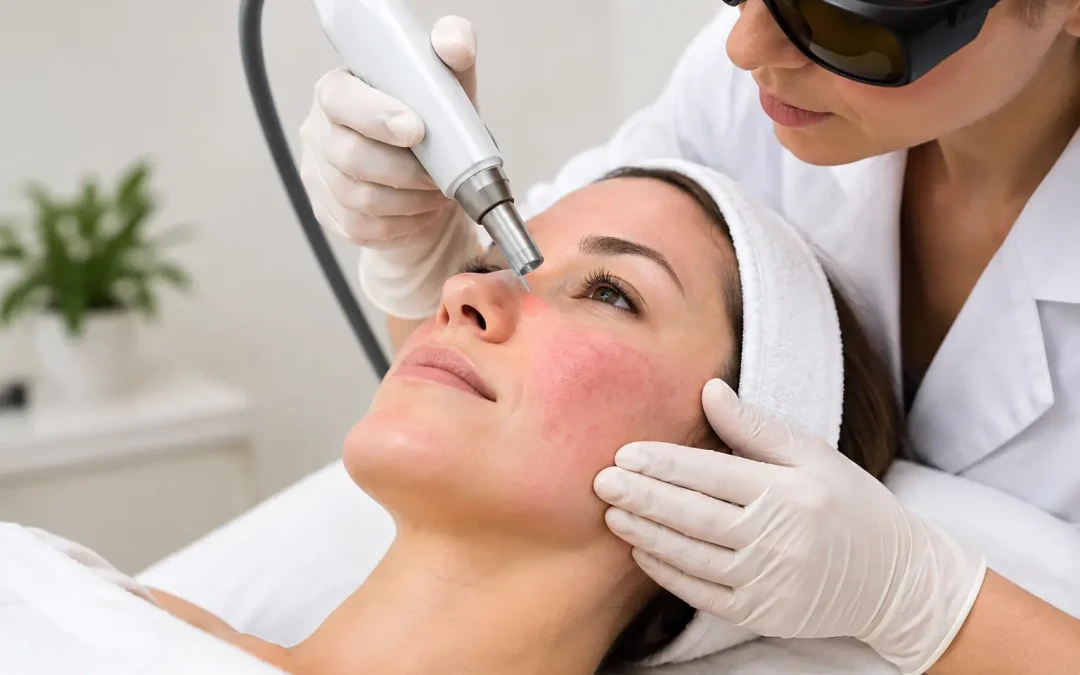
Rosacea redness can feel especially frustrating because it often shows up when you least want it to – during a presentation, a family photo, or a warm Florida afternoon. Skincare and prescription medications can be valuable parts of managing the condition, but they may not fully address visible facial vessels or persistent background redness. For many people, laser treatment for rosacea offers a targeted way to reduce the look of those concerns and feel more comfortable in their skin.
The right treatment is never just about choosing a device. Rosacea can look and behave differently from one person to the next, which is why a thoughtful consultation, honest expectations, and a plan built around your skin are so important.
Why Rosacea Redness Can Be Hard to Treat
Rosacea is a chronic inflammatory skin condition that commonly affects the cheeks, nose, chin, and forehead. Some people mainly experience frequent flushing and lingering redness. Others notice tiny visible blood vessels, acne-like bumps, rough texture, stinging, or a combination of symptoms.
Triggers also vary. Heat, sun exposure, alcohol, spicy foods, stress, exercise, and certain skincare ingredients can cause flushing for some people. That means a treatment that improves visible redness does not necessarily remove every trigger or prevent rosacea from ever flaring again.
This distinction matters. Laser and light treatments are designed to address visible vascular redness and vessels. They are not a cure for rosacea, and they may not be the first choice when active bumps, severe irritation, or another skin condition is driving the concern. In those cases, medical rosacea care and a gentler skincare approach may need to come first.
How Laser Treatment for Rosacea Works
Vascular laser treatments use specific wavelengths of light that are attracted to the red pigment in blood vessels. The energy gently heats targeted vessels beneath the skin, allowing the body to gradually clear them over time. This can lessen the appearance of broken capillaries and diffuse facial redness without surgery.
Intense pulsed light, often called IPL, is another option frequently used for redness. IPL is technically not a laser. It delivers broad-spectrum light in controlled pulses and can be helpful for diffuse redness, visible vessels, and certain sun-related pigment concerns. The best choice depends on your skin tone, the pattern and depth of redness, your sensitivity level, and the technology available.
A skilled provider will not treat every red face the same way. Facial redness can also be related to acne, irritation, sun damage, dermatitis, medication reactions, or melasma. Identifying what is truly happening in your skin helps protect both your comfort and your results.
What It May Improve – and What It Will Not
Many clients pursue treatment to soften persistent pink or red tones, reduce flushing-related visible redness, and make small facial vessels less noticeable. Improvements may make makeup application easier or reduce the need to rely on color-correcting products every day.
Results are usually gradual, not instant. Some vessels may fade quickly, while more widespread redness can improve over a series of sessions. Maintenance treatments may be appropriate because rosacea is ongoing and new vessels or redness can develop with time.
Laser and IPL treatments do not replace daily sun protection, trigger management, or dermatologist-directed care when needed. They also cannot promise that every flare, bump, or sensation of heat will disappear. Clear communication about those boundaries is part of responsible aesthetic care.
Who May Be a Good Candidate?
Adults with stable rosacea-related redness or visible facial vessels may be good candidates for laser or IPL treatment. The ideal time to begin is often when the skin is relatively calm rather than during a significant flare with marked burning, swelling, or irritation.
Your provider should consider more than your rosacea. Skin type and tone, recent tanning or sun exposure, history of cold sores, current medications, pregnancy status, and past reactions to cosmetic treatments all influence whether treatment is appropriate and how settings should be selected. Deeper skin tones can be treated safely with the right approach, but they require especially careful device selection and provider expertise to reduce the risk of unwanted pigment changes.
If you are using prescription retinoids, photosensitizing medications, or strong exfoliating products, you may need to pause them before treatment under the guidance of your prescribing clinician or treatment provider. Never stop a prescribed medication without medical direction.
What a Personalized Consultation Should Include
A good consultation should feel like a conversation, not a sales pitch. Your provider should ask when your redness began, what makes it worse, what treatments you have tried, and what result would make a meaningful difference in your day-to-day confidence.
They should also examine the type of redness you have. A few distinct facial vessels may call for a different plan than generalized flushing across the cheeks. If bumps and pustules are the bigger issue, a provider may recommend pairing laser or light care with medical management and calming skincare rather than relying on a device alone.
At A Younger You Med Spa, provider-guided planning helps ensure that laser and light recommendations match your skin concerns, comfort level, and goals. You should leave a consultation knowing what type of treatment is being recommended, how many sessions may be needed, what downtime is realistic, and what the investment includes.
What to Expect During Your Appointment
The skin is cleansed before treatment, and protective eyewear is used. Depending on the device and your sensitivity, a cooling method or topical numbing product may be used. Many people describe the feeling as a quick snap of warmth against the skin. It is typically brief, but treatment should always be adjusted with your comfort in mind.
A session can be relatively quick, especially when treating focused areas such as the cheeks or nose. Your provider may perform a test spot first if you have sensitive skin, a history of pigmentation changes, or uncertainty about how your skin will respond.
Immediately afterward, it is common to look pink or flushed, similar to mild sun exposure. Small treated vessels may temporarily darken or appear more noticeable before they fade. The exact recovery experience varies with the device, treatment settings, and your individual skin response.
Recovery: Gentle Care Makes a Difference
Your aftercare instructions should be specific to your treatment, but the goal is consistent: keep the skin calm while it recovers. For the first several days, most clients are advised to:
- Avoid direct sun, tanning, hot tubs, saunas, and intense heat exposure.
- Use a gentle cleanser, bland moisturizer, and broad-spectrum sunscreen as directed.
- Pause scrubs, acids, retinoids, and other potentially irritating active products until cleared to restart them.
- Avoid picking, rubbing, or trying to exfoliate treated areas that appear darker or dry.
Florida sun can intensify redness and raise the risk of pigment changes after laser or light treatments. Thoughtful sun protection is not an optional extra. It is one of the most practical ways to protect your investment and support healthier-looking skin between visits.
How Many Treatments Will You Need?
There is no one-session answer that applies to everyone. A prominent individual vessel may respond differently than broad background redness, and long-standing rosacea often benefits from a series of treatments spaced several weeks apart. Your provider can recommend a starting plan after assessing your skin and response to the first session.
Taking consistent photos in the same lighting can be more useful than checking the mirror every day. Rosacea naturally fluctuates, so progress is easier to see when you compare changes over several weeks rather than judging your skin after one warm day or one stressful week.
Maintenance is also normal. Think of laser or IPL as part of a longer-term rosacea strategy that may include gentle professional skincare, daily SPF, attention to triggers, and medical care when symptoms change.
Choosing Treatment With Confidence
The safest, most satisfying results come from matching the treatment to the person, not from chasing the strongest setting or the fastest promise. Ask who will perform your treatment, what technology will be used, how they approach your skin type, and what they recommend if your redness is not solely vascular.
You deserve straightforward answers, a comfortable environment, and a plan that respects your budget as well as your skin. If persistent redness is affecting how you feel when you look in the mirror, a consultation can be a calm first step toward understanding your options and choosing care that feels right for you.