
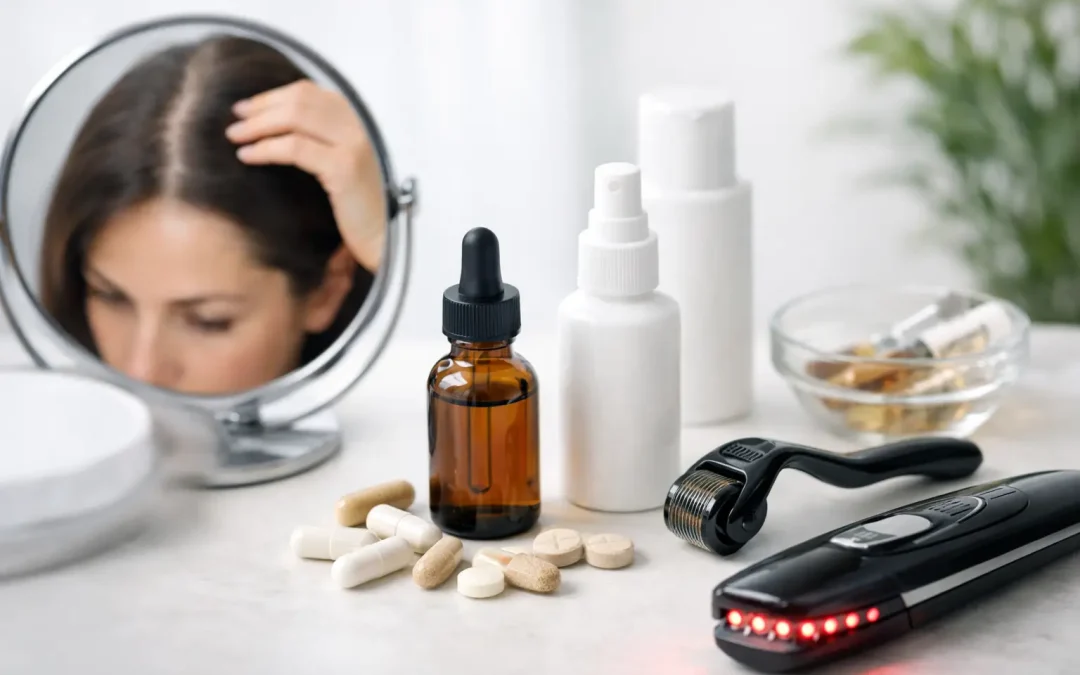
A wider part, more hair in the shower drain, or a ponytail that suddenly feels smaller can be unsettling. The best treatments for thinning hair depend on why shedding or loss is happening in the first place. For many women, hair changes are tied to hormones, genetics, stress, nutritional status, medications, illness, or changes in the scalp itself. A personalized plan gives you a far better chance of seeing meaningful improvement than choosing a product at random.
Hair growth is gradual, so treatment requires patience. The goal is often to slow further thinning, support healthier follicles, and encourage fuller-looking growth over time. A qualified provider can help you understand what is realistic for your hair pattern, health history, and stage of loss.
Start With the Cause of Hair Thinning
Hair naturally cycles through growing, resting, and shedding phases. Problems arise when more follicles enter the shedding phase than usual, when the growth phase becomes shorter, or when follicles gradually produce finer hairs. This is why two people with “thinning hair” may need very different care.
Female pattern hair loss is common and often hereditary. It typically appears as gradual widening along the part or reduced density at the crown while the front hairline remains fairly intact. Hormonal shifts during perimenopause and menopause can make this pattern more noticeable.
Sudden or diffuse shedding may point to telogen effluvium, a temporary disruption in the growth cycle that can occur after a significant illness, surgery, rapid weight loss, childbirth, severe stress, or a major life change. Low iron stores, thyroid conditions, inadequate protein intake, and certain medications can also contribute. If hair loss is patchy, painful, itchy, scaly, or accompanied by redness, prompt medical evaluation matters because some inflammatory scalp conditions can cause permanent loss without treatment.
Before beginning a hair restoration program, a provider may review your health history, medications, eating patterns, recent stressors, menstrual or menopausal changes, and the timeline of your shedding. In some cases, lab work or a referral to a dermatologist or primary care provider is the appropriate next step. Honest assessment is part of compassionate care, especially when a concern may have a medical cause beyond aesthetic treatment.
Best Treatments for Thinning Hair: Your Options
Topical minoxidil
Topical minoxidil is one of the most established nonsurgical options for pattern-related hair thinning. Available as a foam or liquid, it is applied to the scalp to help keep follicles in the growth phase longer. It can be helpful for many women with gradual thinning, but consistency is essential.
Some people experience increased shedding during the first several weeks. This can feel alarming, yet it may reflect follicles shifting into a new growth cycle. Results commonly take three to six months to become noticeable, with continued improvement possible over a year. Minoxidil only works while it is being used, so it is generally a long-term commitment. Scalp irritation, unwanted facial hair growth from product transfer, and difficulty maintaining a daily routine are potential trade-offs.
Prescription medications
For some patients, a prescribing clinician may discuss oral medications that support hair growth or address hormone-related hair loss. Low-dose oral minoxidil is used by some providers, though it is not right for everyone and requires careful consideration of blood pressure, heart history, swelling risk, and medication interactions.
Anti-androgen medications may also be considered when hormonal sensitivity is contributing to loss. These options require medical oversight and may not be appropriate during pregnancy or for patients who could become pregnant without reliable contraception. The right approach should be based on your individual health profile, not a one-size-fits-all protocol.
Platelet-rich plasma therapy
Platelet-rich plasma, often called PRP, uses a concentrated portion of your own blood that contains platelets and growth factors. After a small blood draw, the PRP is prepared and carefully injected into areas of thinning on the scalp. The purpose is to support the environment around active follicles and encourage stronger, thicker-looking hair growth.
PRP can be an appealing option for adults who want a provider-guided, nonsurgical treatment using their own biology. It is often used for early to moderate thinning and may be paired with topical treatment for a more comprehensive plan. Most programs begin with a series of treatments spaced several weeks apart, followed by maintenance sessions based on your response.
Results vary. PRP is not a guaranteed cure, and it cannot revive follicles that are no longer active. However, many patients appreciate that it has little downtime and can be tailored to their degree of thinning. Mild tenderness, swelling, or a headache after treatment can occur, but these effects are usually temporary.
Correcting nutritional or wellness factors
Hair is not considered essential tissue by the body, so it can be affected when calories, protein, iron, vitamin D, zinc, or other key nutrients are insufficient. Crash diets and fast, unsupported weight loss can also trigger shedding several months later. That does not mean every person with thinning hair needs a supplement. Taking high-dose vitamins without a confirmed need can be ineffective and, in some cases, counterproductive.
A balanced approach includes adequate protein, nutrient-rich meals, hydration, quality sleep, and medical testing when a deficiency is suspected. Hormonal symptoms such as hot flashes, irregular cycles, fatigue, or changes in body composition are also worth discussing with a qualified medical provider. Hormone care can be valuable for appropriate candidates, but it should be individualized and never treated as an automatic hair-loss solution.
Low-level light therapy
Low-level light therapy uses red or near-infrared light to stimulate cellular activity in the scalp. It is offered through certain in-office devices and at-home caps, helmets, or combs. For some people with pattern thinning, it can serve as a convenient add-on to a broader program.
The trade-off is that results tend to be gradual and devices require frequent, consistent use. Quality also varies considerably among products. A provider can help you decide whether light therapy is worth adding or whether your budget would be better directed toward treatments with a stronger fit for your goals.
A Realistic Timeline for Hair Growth
Hair treatments rarely produce an overnight change. During the first few months, the most meaningful sign may be less shedding rather than dramatic new density. By around three to six months, some patients notice short new hairs, improved coverage around the part, or a fuller ponytail. Photographs taken in consistent lighting and part placement can be more useful than checking the mirror every day.
The extent of improvement depends on the cause, how early treatment begins, and whether follicles are still viable. Early intervention generally offers the best opportunity to preserve existing hair. If thinning has been present for years, the goal may be stabilization and modest thickening rather than complete restoration.
Build a Plan You Can Maintain
The most effective plan is usually one you can continue comfortably. That may mean a simple topical routine, a PRP series with maintenance visits, medical management through your prescribing provider, or a combination of approaches. It should also fit your schedule, budget, and tolerance for downtime or needles.
At A Younger You Med Spa, hair restoration conversations should begin with listening. You deserve clear education about your options, expected treatment schedule, and the factors that may limit results. A thoughtful consultation can also identify when dermatology or primary-care evaluation should come first.
You do not have to wait until thinning becomes severe to ask for guidance. Addressing the change early, with an honest plan and steady follow-through, can help you feel more informed, supported, and confident each time you look in the mirror.