
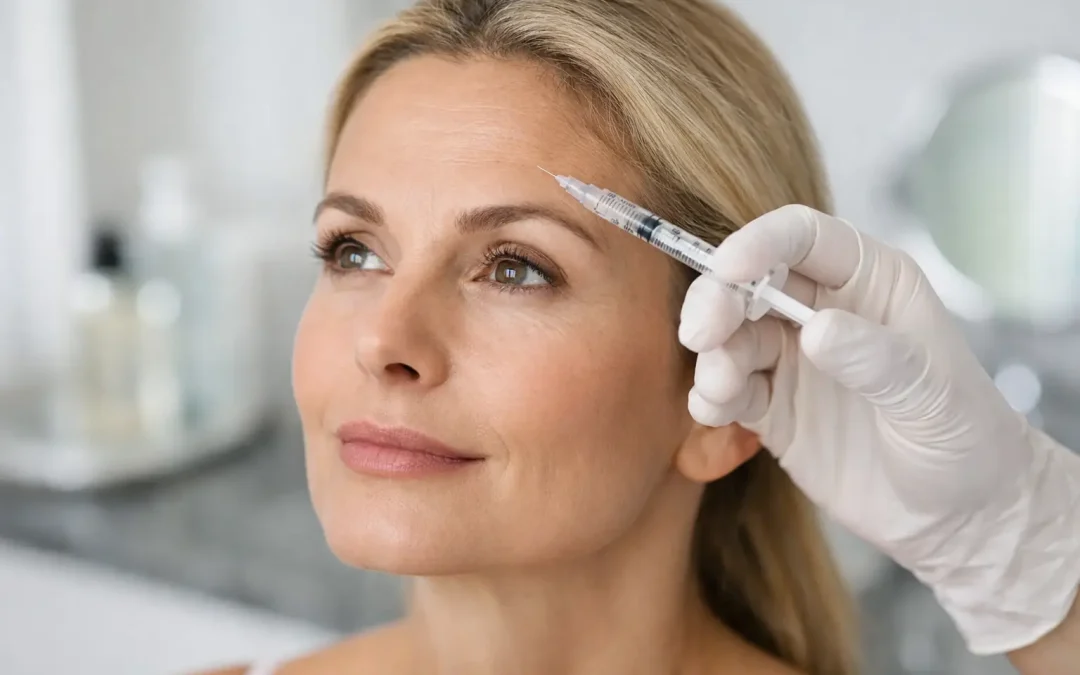
Forehead lines have a way of showing up at the moments when you are most expressive: raising your eyebrows during a meeting, reacting to your kids, or catching yourself in the bathroom mirror after a long day. Botox for forehead wrinkles can soften these horizontal lines without changing who you are or taking away your ability to look like yourself. The key is thoughtful placement, an appropriate dose, and a provider who understands that natural-looking results are personal.
How Botox for Forehead Wrinkles Works
Botox is a neuromodulator, a prescription injectable that temporarily relaxes selected muscles. Horizontal forehead wrinkles are created primarily by the frontalis muscle, which lifts the eyebrows. When that muscle contracts less strongly, the skin above it has an opportunity to rest, and the repetitive folding that creates expression lines is reduced.
This treatment does not fill lines the way a dermal filler does. Instead, it addresses the muscle movement that contributes to them. For many people, this makes Botox a helpful option for dynamic wrinkles – lines that appear or deepen when the face moves.
Forehead treatment requires more nuance than people often realize. The frontalis helps lift the brow, while other muscles around the brow pull downward. Relaxing the forehead too aggressively, or treating it without considering the muscles between the eyebrows, can create a heavy or low-brow appearance in some clients. A skilled injector evaluates your natural brow position, eyelid anatomy, muscle strength, and the expressions you want to preserve before recommending treatment.
When Forehead Lines May Respond Best
Botox is often a strong choice when your forehead lines are most noticeable while you lift your eyebrows. It can also be used preventively for clients who are beginning to see creasing settle into the skin and want to reduce the repetitive movement that contributes to deeper lines over time.
If lines remain visible even when your face is completely relaxed, Botox may still help, but it may not erase every etched-in crease by itself. Static lines can reflect years of movement, sun exposure, collagen loss, dehydration, and changes in skin texture. In those cases, a personalized plan may combine neuromodulator treatment with professional skincare, microneedling, chemical peels, laser or IPL services, or other skin-rejuvenating options. The right combination depends on your skin type, goals, downtime preferences, and budget.
Your Consultation Should Be More Than a Quick Injection
A reassuring treatment experience starts with a real conversation. Your provider should ask what you see in the mirror, whether you have had injections before, and how much movement you are comfortable keeping. Some clients want their forehead nearly smooth. Others love a little movement and simply want the lines to look softer. Neither goal is wrong.
Your medical history matters, too. Be open about medications, allergies, previous cosmetic treatments, and any history of eyelid drooping, facial surgery, or neuromuscular conditions. Botox is not appropriate for everyone. If you are pregnant, breastfeeding, have an active skin infection at the injection site, or have certain neurological or muscular conditions, your provider may recommend waiting or choosing another approach.
At A Younger You Med Spa, treatment planning is guided by your individual facial anatomy and desired outcome, not a one-size-fits-all injection map. This is especially valuable for forehead lines, where a few carefully chosen injection points can make a meaningful difference.
What Happens During a Forehead Botox Appointment?
After your consultation and consent process, your provider may ask you to raise your eyebrows, frown, and relax your face. These expressions help identify how your muscles move and where lines are forming. The skin is cleansed, and small injections are placed with a very fine needle.
Most appointments are brief, often taking around 15 to 30 minutes once your plan is established. Clients commonly describe the injections as quick pinches. Mild redness, tiny raised spots, or pinpoint bruising can occur, but these effects usually fade quickly. There is generally no prolonged downtime, which is one reason this treatment fits comfortably into busy schedules.
Your provider will give you aftercare directions based on your treatment. In general, it is wise to avoid rubbing or massaging the treated area and to follow guidance about strenuous exercise, heat exposure, and lying flat immediately after your appointment. If you have a special event, schedule with enough time for any minor bruising to resolve and for your results to develop.
When You Will See Results
Botox does not create an instant change at the appointment. Many clients begin noticing reduced movement within three to seven days, with the full effect typically visible around 10 to 14 days. Your forehead should look more rested, while the goal remains a natural expression that feels like you.
Results commonly last about three to four months, although the timeline varies. Your metabolism, muscle strength, dose, treatment history, and facial movement patterns all play a role. Consistent maintenance appointments may help you keep your preferred look and can reduce the habit of strongly contracting the treated muscles between visits.
It is best not to judge your result too early. Give the product time to settle, then attend a follow-up if your provider recommends one. Small adjustments are sometimes appropriate, but adding more product before the initial treatment has taken full effect can lead to an overtreated appearance.
Natural Results Depend on a Personalized Dose
A common concern is looking frozen. The truth is that an overly still forehead is not the only possible outcome. Botox can be tailored to soften lines while allowing selected movement, particularly when a provider uses a conservative, anatomy-based approach.
The appropriate dose is not determined by age alone. A 35-year-old with strong forehead movement may need a different plan than a 60-year-old with lighter movement and more static skin lines. Brow shape, eyelid position, previous treatment response, and personal preference all matter. Photos can be useful during your consultation because they show whether your forehead lines are a concern only in the mirror or in everyday expressions and pictures as well.
Be cautious of treatment offers that promise a certain number of units for every person. Transparent pricing is valuable, but quality care also means treating the person in front of you rather than forcing every face into the same package.
Safety and Side Effects to Understand
When administered by a qualified medical professional, Botox is widely used for facial lines. Still, every injectable treatment carries potential side effects. Temporary tenderness, swelling, redness, headache, bruising, or a tight feeling in the forehead can occur. Bruising risk may be higher for people taking certain medications or supplements, so discuss these with your provider before treatment rather than stopping anything on your own.
Less common effects can include temporary brow or eyelid drooping, asymmetry, or an unexpected change in facial movement. These concerns are one reason medical expertise and careful assessment matter so much in the forehead area. Contact your provider promptly if you have questions about your result or experience symptoms that concern you. Seek urgent medical care for trouble breathing, swallowing, speaking, or other serious symptoms.
Choosing a properly trained, licensed provider is not simply about comfort. It is about protecting your health and getting a plan that respects the balance of your facial features.
Supporting Smoother Skin Between Appointments
Botox addresses movement, but your daily habits influence the quality of the skin itself. Consistent sunscreen use is one of the most practical ways to protect against UV-related collagen breakdown and help prevent lines from becoming more pronounced. A customized professional skincare routine can support hydration, cell turnover, and overall texture.
If your concern is a combination of forehead wrinkles, sun spots, rough texture, and loss of firmness, ask about a broader skin-rejuvenation plan. Treating the muscle and the skin as separate but connected concerns often delivers a more polished, refreshed result than relying on one service alone.
You do not need to wait until forehead lines feel severe to ask questions. A calm, individualized consultation can help you decide whether Botox fits your goals now, later, or not at all – and that clarity is a meaningful part of feeling confident in your care.