
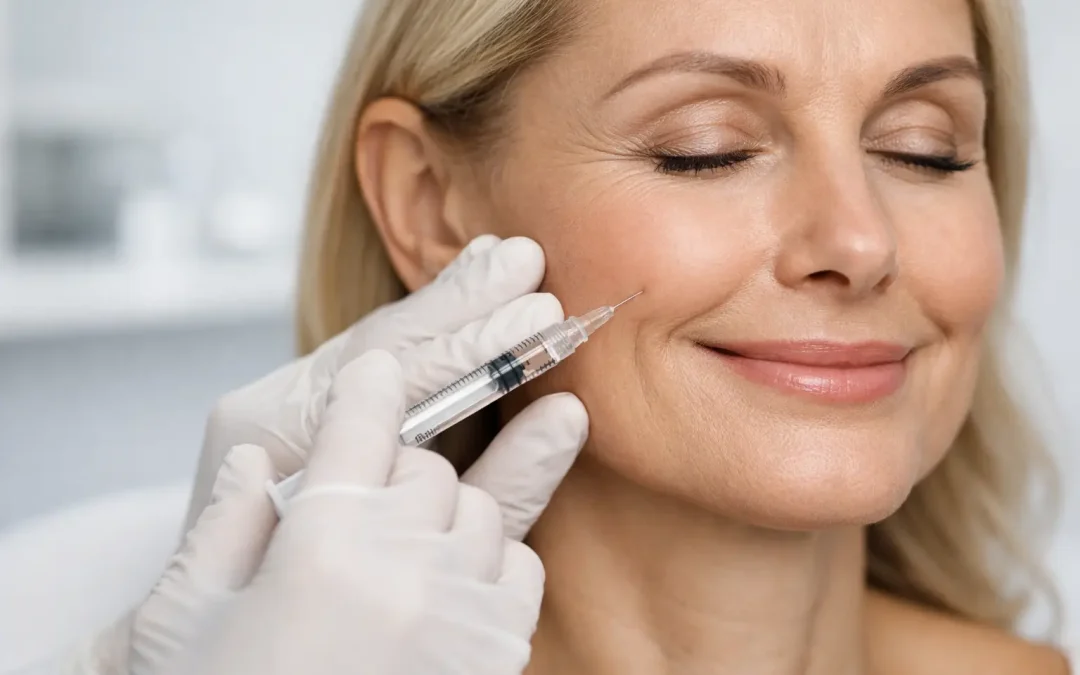
Smile lines can become noticeable long before you feel “old.” You may see them in photos, when applying makeup, or after a good night’s sleep when the folds beside your nose still look more pronounced than you expect. Dermal fillers for smile lines can soften these creases without surgery, but the most natural results come from treating the face thoughtfully rather than simply filling every line.
At A Younger You Med Spa, treatment planning begins with listening to what you see and what you hope to change. Some clients want a subtle refresh. Others have deeper folds related to years of facial movement and volume loss. Both goals deserve an honest, individualized recommendation.
What are smile lines?
Smile lines, medically called nasolabial folds, run from the sides of the nose toward the corners of the mouth. Everyone has them to some degree. They are part of normal facial anatomy and become visible whenever you smile.
Over time, several changes can make these folds appear deeper. The cheeks can lose volume and descend slightly, the skin produces less collagen and elastin, and repeated facial expression creates a more established crease. Genetics, sun exposure, smoking, weight changes, and skin quality can also affect how quickly smile lines become more noticeable.
That is why smile lines are not always just a “line problem.” In many faces, they are a sign that the midface needs support. Understanding that difference is one of the keys to a balanced filler treatment.
How dermal fillers for smile lines work
Most injectable fillers used for this area are made with hyaluronic acid, a substance that naturally occurs in the body and attracts water. When placed carefully beneath the skin, filler can restore lost volume, provide gentle structural support, and soften the appearance of a fold.
A skilled provider may place filler directly into the smile line, but that is not the only approach. When the cheeks have flattened or shifted downward with age, restoring appropriate cheek support can lift and soften the area indirectly. This may create a more refreshed appearance with less product placed in the fold itself.
The right plan depends on your facial structure, the depth of the lines, skin thickness, and the way your face moves when you speak and smile. Treating smile lines too aggressively can create an overfilled or heavy look around the mouth. A conservative, layered approach often gives the most believable result.
What natural-looking results can look like
A successful filler treatment does not erase every expression line or make your face look different. It should help you look rested, smoother, and more like yourself. You should still be able to smile, laugh, and move your face naturally.
For some clients, one treatment makes a visible difference right away. For deeper folds, treatment may be best completed gradually over more than one appointment. This gives the provider an opportunity to assess how the filler settles and helps you stay in control of the level of correction.
What happens during a filler appointment?
Your appointment should start with a medical and aesthetic consultation. Your provider will review your health history, medications, allergies, previous injectable treatments, and cosmetic goals. They will also assess your face at rest and in motion, because a crease that looks prominent in a still photo may behave very differently when you smile.
After a plan is created, the treatment area is cleansed. Many fillers contain lidocaine, a local anesthetic that helps improve comfort. Depending on the treatment plan, filler may be placed with a very fine needle or a blunt-tip cannula. You may feel pressure, a brief pinch, or mild stinging, but most clients find the procedure manageable.
Treatment often takes less than an hour, including consultation time. You can usually return to normal daily activities afterward, although you may prefer to schedule around a special event in case of temporary swelling or bruising.
How long do fillers for smile lines last?
Results vary, but hyaluronic acid fillers for smile lines commonly last around 6 to 18 months. The exact timeline depends on the product selected, the amount used, your metabolism, facial movement, and whether cheek support is also part of your treatment plan.
The area around the mouth is highly mobile, so fillers placed directly in smile lines may wear away sooner than filler in less active areas of the face. Regular maintenance appointments can help preserve results, but there is no need to treat on a rigid schedule. Your provider can help you decide when a touch-up actually makes sense.
Hyaluronic acid filler also has an additional advantage: it can be dissolved by a qualified medical provider if medically necessary or if an adjustment is desired. That does not make filler risk-free, but it is a helpful consideration for clients who value flexibility.
Recovery and aftercare
Mild swelling, tenderness, redness, and bruising can happen after dermal filler injections. These effects are typically temporary and often improve within a few days. Some swelling can take up to two weeks to fully settle, especially if you are prone to bruising or have had treatment in more than one area.
Your provider will give you personalized aftercare instructions. In general, avoid pressing or massaging the treated area unless you have been specifically instructed to do so. It is also wise to postpone strenuous exercise, significant heat exposure, alcohol, and dental work for the period your provider recommends.
If you have an important wedding, reunion, or photo session coming up, plan ahead. Scheduling filler at least two weeks before an event gives your skin time to settle and gives you breathing room if you experience bruising.
Safety matters more than a bargain
Dermal filler is a medical treatment, not a casual beauty service. While most side effects are mild and temporary, injectable fillers carry uncommon but serious risks, including vascular occlusion, infection, and skin injury. For this reason, it is essential to choose a qualified, medically trained injector who understands facial anatomy, uses approved products, and has a clear emergency protocol.
Be open during your consultation about medications, supplements, autoimmune conditions, history of cold sores, prior cosmetic procedures, and any past reactions to injectable treatments. Certain factors may mean you should postpone filler, choose another treatment, or receive additional guidance first. Pregnancy and breastfeeding are generally times to defer elective filler treatment.
An honest provider will also tell you when filler is not the best answer. Very fine lines caused mainly by sun damage or thinning skin may respond better to microneedling, chemical peels, laser-based treatments, or professional skincare. If significant skin laxity is the main concern, filler alone may not create the improvement you want.
Is filler the right choice for your smile lines?
You may be a good candidate if your smile lines bother you at rest, you are in good overall health, and you want a nonsurgical option with little downtime. The best candidates also have realistic expectations. Filler can soften a fold and restore facial balance, but it cannot stop facial movement or permanently prevent aging.
The right amount of product is personal. A younger client with early volume loss may need very little. Someone with deeper folds may benefit from cheek restoration plus careful treatment around the mouth. During your consultation, ask where filler would be placed, why that approach fits your facial anatomy, how much product may be needed, and what maintenance could look like over time.
Your face tells a story every time you smile. The goal is not to erase that story, but to help your reflection feel more aligned with the confidence and energy you already bring to the room.