
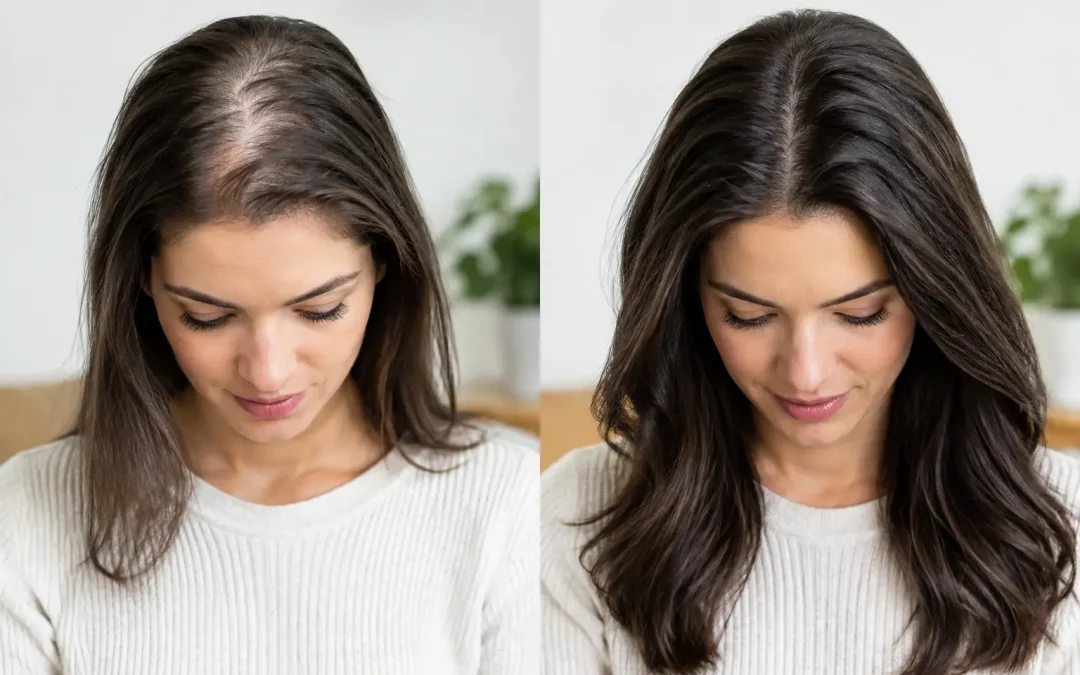
Hair in the shower drain, a widening part, or a ponytail that suddenly feels thinner can be deeply personal concerns. Hair growth treatment results are rarely instant, but a thoughtful, provider-guided plan can help many people support healthier follicles, reduce shedding, and work toward fuller-looking hair over time.
At A Younger You Med Spa, we believe honest expectations are part of excellent care. Your hair loss pattern, health history, hormones, stress levels, medications, and treatment consistency all influence what progress may look like. The goal is not to promise a particular outcome. It is to understand what may be affecting your hair and recommend an appropriate path forward.
What Hair Growth Treatment Results Can Realistically Look Like
For many clients, early progress is subtle. You may first notice less hair shedding when washing or brushing, followed by a healthier-looking scalp and short new hairs around the hairline or part. As those hairs mature, the area may begin to look denser and more evenly covered.
The most satisfying results tend to be gradual. Hair grows in cycles, and follicles need time to respond to treatment. A change that feels small at eight weeks can become more noticeable after several months of consistent care. Before-and-after photos taken in the same lighting, with the same hairstyle and part placement, often reveal progress that is hard to see from day to day.
Results also depend on the cause and duration of hair thinning. Someone addressing recent stress-related shedding may have a different experience than someone with long-standing hereditary thinning or areas where follicles are no longer active. This is why a personalized consultation matters. It helps set realistic goals before treatment begins.
Why Platelet-Rich Plasma May Support Hair Growth
Platelet-rich plasma, commonly called PRP, uses a concentrated portion of your own blood that contains platelets and growth factors. During a hair restoration treatment, PRP is carefully placed into targeted areas of the scalp to support the environment around the follicles.
The treatment is often considered by women and men experiencing diffuse thinning, widening parts, early hairline changes, or increased shedding. PRP is not a transplant, and it does not create new follicles where none remain. Instead, it is intended to support existing follicles that may be weakened or producing finer, shorter hairs.
A PRP appointment typically begins with a small blood draw. The sample is processed to separate the platelet-rich portion, then your provider uses a series of precise injections in the treatment area. Numbing options and comfort measures can be discussed before your appointment so you know what to expect.
Mild tenderness, redness, swelling, or a tight feeling in the scalp can occur afterward. These effects are generally temporary. Your provider will give you personalized aftercare guidance, including when to wash your hair, resume workouts, and use hair products.
Your Timeline for Hair Growth Treatment Results
Patience is a meaningful part of hair restoration. A treatment plan may be recommended as a series of sessions, followed by maintenance appointments based on your response and goals. While every person is different, this is a practical general timeline:
The first month
The scalp may feel tender for a short period after treatment, but most clients return to normal daily activities quickly. At this stage, visible density is unlikely. The focus is on beginning the process and following your aftercare instructions.
Months two and three
Some clients notice reduced shedding or changes in hair texture. This can be encouraging, although it is still early. Hair growth cycles do not move on a calendar that can be rushed, so consistency matters more than checking the mirror every day.
Months four through six
This is often when improvements become easier to notice. New growth may appear as fine hairs, and existing strands may seem stronger or fuller. Coverage around a part or thinning crown can improve, depending on the condition of the follicles and the underlying cause of hair loss.
After six months
Your provider can assess your progress, compare photos, and discuss whether maintenance treatments or additional strategies are appropriate. Some people are pleased with visible improvement, while others may need a more comprehensive plan or a referral for further medical evaluation.
Factors That Affect Your Results
No two scalps or hair concerns are identical. Genetics can play a major role, especially with female-pattern or male-pattern hair thinning. Hormonal shifts during perimenopause, menopause, postpartum recovery, or thyroid changes can also affect density and shedding.
Nutrition, major illness, rapid weight loss, emotional stress, scalp inflammation, and certain medications may contribute as well. If shedding begins suddenly, appears in round patches, causes itching or scaling, or occurs alongside fatigue and other health changes, it deserves medical attention. Aesthetic treatment can be one part of a plan, but it should not replace a proper evaluation of concerning symptoms.
Timing matters, too. Treatments tend to have more potential when follicles are still present and producing hair, even if the strands have become finer. Long-standing areas of smooth scalp may not respond in the same way. Honest consultation protects you from investing in a service that is unlikely to meet your goals.
How to Support Healthier-Looking Hair Between Visits
The right at-home habits can complement your in-office plan. Be gentle with wet hair, limit tight styles that pull at the roots, and use heat thoughtfully. If you color or chemically treat your hair, ask your provider how to coordinate those services around treatment days.
A balanced diet with adequate protein, iron, vitamins, and overall calories supports the body functions involved in hair production. Supplements are not automatically the answer, particularly because excess amounts of certain nutrients can be unhelpful. It is wise to discuss supplements, medications, and health changes with a qualified medical provider.
Stress management also deserves a place in the conversation. No one can eliminate stress completely, especially while balancing work, family, and daily responsibilities. Still, quality sleep, movement, hydration, and sustainable routines can support your general wellness and make it easier to stay consistent with your recommended treatment schedule.
Choosing a Treatment Plan That Feels Right
A meaningful hair consultation should feel like a conversation, not a sales pitch. Your provider should ask when the thinning began, whether it is worsening, what treatments you have tried, and what result would make you feel more confident. They should also review your medical history and explain what PRP can and cannot do.
Some clients want to preserve the hair they have and slow the appearance of thinning. Others hope to improve a particular area, such as a widening part or visible scalp near the crown. Both goals are valid, but they may require different expectations and timelines.
Ask how many sessions may be recommended, when progress will be reassessed, what the total investment may involve, and whether maintenance could be needed. Clear answers help you make a decision with confidence and avoid the frustration of expecting overnight change from a biological process that takes time.
Hair concerns can affect the way you style your hair, show up in photos, and feel when you look in the mirror. You deserve care that is compassionate, medically informed, and focused on your individual goals. A consultation is a good place to begin – not with pressure or promises, but with an honest conversation about what healthier, fuller-looking hair could mean for you.