
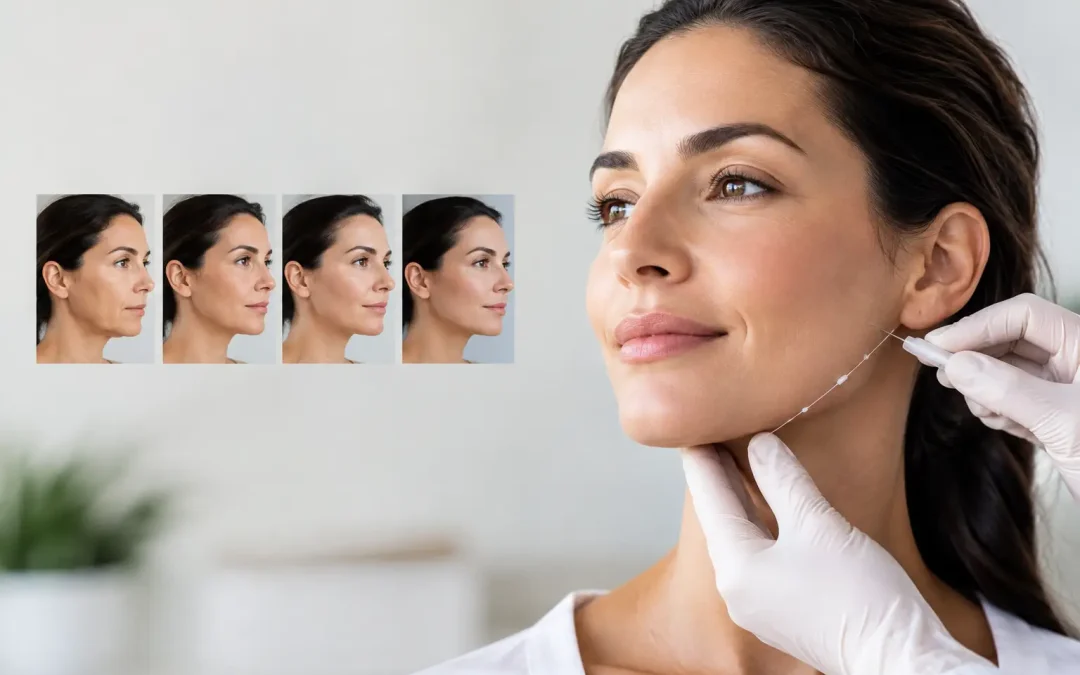
A softer jawline, mild cheek descent, and early jowling can make the face look tired even when you feel well-rested. For many people, surgery feels like more than they want or need. PDO lift results can offer a middle ground: a refreshed, naturally supported appearance with a minimally invasive treatment and far less downtime than a surgical facelift.
The key is knowing what a thread lift can realistically do. PDO threads can gently reposition selected areas while encouraging your body to build collagen over time. They are not designed to duplicate the dramatic correction of surgery, but for the right candidate, they can create a meaningful improvement in facial definition and confidence.
What PDO Lift Results Can Look Like
PDO, or polydioxanone, threads are absorbable sutures placed beneath the skin by a qualified medical provider. Depending on the treatment area and the type of threads selected, they can provide a subtle mechanical lift while creating a supportive framework under the skin. As the threads dissolve, they stimulate collagen production, which helps improve skin firmness and texture over the following months.
The most satisfying results usually look like you, only more rested. Clients may notice a more defined jawline, a softer appearance of early jowls, a modest lift through the cheeks, or improved support around the lower face. Threads may also be used in carefully selected areas of the neck, brows, or midface.
A PDO thread lift is best suited to mild-to-moderate skin laxity. If there is significant loose skin, pronounced volume loss, or a desire for a major facial change, another approach may better match your goals. During a consultation, your provider should discuss this openly, rather than promising an outcome that threads cannot deliver.
Your PDO Lift Results Timeline
One reason people appreciate PDO threads is that changes happen in stages. You may see an immediate improvement from the placement and tension of lifting threads, but that is only part of the story.
The first few days
Immediately after treatment, the area may look more elevated or defined. Swelling can make the result appear uneven or more pronounced at first, especially along the cheeks and jawline. Mild tenderness, tightness, bruising, or small areas of puckering can occur. These effects generally improve as the tissue settles.
It is normal to feel the threads when you make certain facial expressions during the first several days. Most clients can return to many normal routines quickly, but your provider may advise you to avoid strenuous exercise, dental work, facial massage, and wide mouth movements for a short period.
Weeks two through four
As early swelling resolves, the result begins to look more natural. The face should not look pulled or overdone. Instead, the treated area gradually settles into a more refreshed contour. This is often the point when clients begin to appreciate the visible lift without being reminded of the recovery process.
This stage can require patience. Healing is not perfectly symmetrical from day to day, and minor differences often settle with time. Follow-up care gives your provider the opportunity to assess your progress and answer questions based on your individual response.
Months one through three
Collagen stimulation becomes a more important part of the outcome. PDO threads are biocompatible and gradually absorbed by the body, but the collagen response they encourage can continue to enhance the skin’s support and quality. Many clients report that their skin feels firmer and their facial contours look more refined during this period.
The degree of collagen production varies. Age, skin condition, lifestyle, genetics, and the treatment plan all influence how your skin responds. That is why before-and-after photos should be viewed as examples, not a guarantee of the exact change you will experience.
Six months and beyond
PDO lift results commonly last about 12 to 18 months, although the timeline varies by person, treatment area, thread type, and rate of collagen breakdown. Some clients choose maintenance treatments before the effects fully fade. Others combine threads with skin-quality treatments, injectables, or professional skincare to support a more comprehensive facial rejuvenation plan.
What Determines How Long Results Last?
Thread lifts are personalized treatments, not a one-size-fits-all procedure. A thoughtful plan considers facial anatomy, skin thickness, degree of laxity, and where support will create the most balanced result. The number and type of threads matter, but more threads do not automatically mean better results. Strategic placement and skilled technique are essential.
Your daily habits also play a role. Smoking, significant weight fluctuations, high sun exposure, and limited skin care can contribute to faster collagen loss. Consistent sunscreen use, a healthy lifestyle, and medical-grade skincare can help protect the quality of your skin after treatment.
It also helps to be clear about the concern you want to address. Threads can lift and support, but they do not replace lost volume the way dermal filler can. They do not relax expression lines the way neuromodulators can. They also do not resurface pigment or texture concerns in the way laser treatments, chemical peels, or microneedling may. In some cases, combining treatments produces a more harmonious outcome than relying on threads alone.
Choosing Between PDO Threads and Other Options
If your main concern is early sagging around the cheeks, jawline, or lower face, PDO threads may be worth considering. They can be especially appealing for clients who want visible improvement without incisions, general anesthesia, or the extended recovery associated with surgery.
If your concern is hollowing in the cheeks or under-eye area, filler or biostimulatory treatments may be more appropriate. If your skin feels crepey, dull, or uneven, collagen-induction treatments may better address its quality. If laxity is advanced, a surgical consultation may be the most honest recommendation.
A good aesthetic plan does not push every concern into one treatment category. It starts by listening to what you see in the mirror, evaluating your skin and facial structure, and explaining what each option can reasonably accomplish.
Safety, Recovery, and Setting Realistic Expectations
PDO thread lifts should always be performed by a trained, qualified medical provider in an appropriate clinical setting. Like any aesthetic procedure, they carry risks. Bruising, swelling, tenderness, asymmetry, dimpling, thread visibility, infection, and thread migration are possible, though careful technique and appropriate aftercare help reduce complications.
Be candid during your consultation about medications, supplements, allergies, prior facial procedures, and medical conditions. You may need to avoid certain blood-thinning medications or supplements when medically appropriate and only under the guidance of the clinician who prescribed them. Pregnancy, active infection, certain autoimmune conditions, or unrealistic expectations may mean it is better to postpone or choose another treatment.
At A Younger You Med Spa, the goal is not to make every face look the same. It is to help you understand your options and choose a treatment plan that respects your features, comfort level, budget, and desired level of change.
The best PDO lift results are often the ones friends notice without being able to identify exactly why you look refreshed. A personal consultation can help determine whether threads are the right next step for your skin and whether a subtle lift, a combined approach, or another treatment will serve your goals best.