
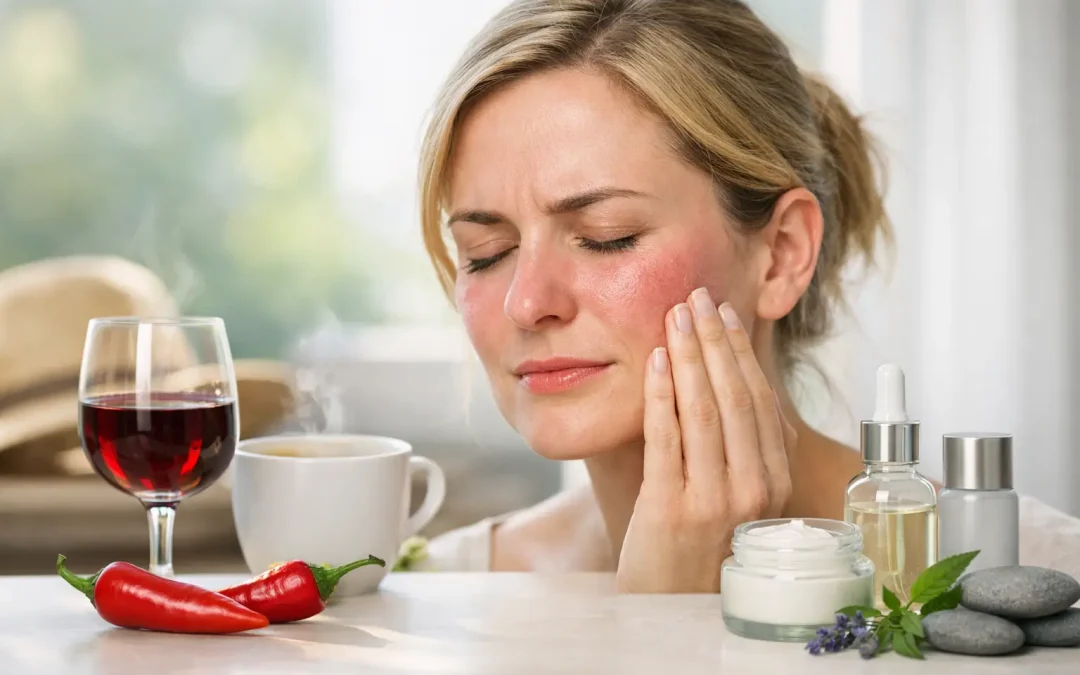
A cup of hot coffee, a stressful meeting, a sunny afternoon in Central Florida – for someone with rosacea, a familiar flush can seem to appear without warning. The truth is that rosacea flare triggers are highly personal. What causes burning, redness, bumps, or visible vessels for one person may have little effect on another.
Rosacea is a chronic inflammatory skin condition, but that does not mean your skin has to feel unpredictable all the time. Learning what sets off your symptoms can help you make more confident day-to-day choices and create a gentler plan for supporting your skin. The goal is not perfection or avoiding every enjoyable thing in life. It is identifying patterns, protecting a sensitive skin barrier, and getting professional guidance when redness or discomfort is difficult to manage.
What Happens During a Rosacea Flare?
Rosacea often affects the cheeks, nose, chin, forehead, and sometimes the eyes. A flare may look like persistent or temporary facial redness, warmth, stinging, acne-like bumps, dry rough patches, or visible tiny blood vessels. Some people notice their skin becoming reactive to products they once tolerated without a problem.
During a flare, facial blood vessels can dilate more easily, and the skin’s protective barrier may be less able to handle heat, friction, harsh ingredients, and environmental exposure. This is why a product marketed as “active” or powerful is not always the right choice for rosacea-prone skin. More intensity does not necessarily produce better results.
Rosacea can overlap with acne, sun damage, sensitivity, or uneven pigmentation, so it is worth having your skin evaluated rather than assuming every red bump needs the same treatment. A personalized approach can make a meaningful difference.
Common Rosacea Flare Triggers
Although your individual trigger list may be short or long, several categories come up often. Start by considering the conditions surrounding a flare, not just the skincare product you used that morning. Your skin may react to a combination of factors, such as heat plus stress plus a new exfoliant.
Heat, Sun, and Weather Changes
Florida sunshine and humidity can be challenging for rosacea-prone skin. Direct UV exposure, hot cars, outdoor workouts, hot showers, steam rooms, and even a warm kitchen can lead to facial flushing. Sudden changes between air-conditioned indoor spaces and outdoor heat can have a similar effect.
Daily broad-spectrum sunscreen is one of the most practical habits for many people with rosacea. Look for a formula designed for sensitive skin and one you will actually wear consistently. Mineral sunscreen options containing zinc oxide or titanium dioxide are often well tolerated, but preferences and sensitivities vary.
A wide-brimmed hat, shade when possible, and cooler water for cleansing can also reduce avoidable heat exposure. These small adjustments are especially useful before an outdoor event, vacation, or day spent near the water.
Food and Drinks
Spicy foods, hot beverages, alcohol, and certain foods can cause flushing for some people. Red wine is a frequently reported concern, but it is not the only possible culprit. Alcohol in general, very hot coffee or tea, spicy sauces, and highly processed foods may bother certain individuals.
There is no universal rosacea diet. Eliminating many foods at once can become frustrating and unnecessary. Instead, pay attention to whether a particular food or drink repeatedly leads to warmth or redness within a few hours. If it does, experiment with a lower-temperature version, a smaller serving, or a different option rather than assuming you must give it up permanently.
Stress and Strong Emotions
Stress does not cause rosacea, and a flare is never your fault. Still, stress, embarrassment, anxiety, anger, and intense exercise can increase blood flow to the face and make flushing more noticeable. Many clients find that their skin is more reactive during busy periods at work, family transitions, or times when sleep is disrupted.
Simple stress-supporting habits can be skin-supporting habits, too. A few quiet minutes before bed, regular movement at a comfortable intensity, hydration, and adequate sleep can help your body recover. If strenuous workouts leave your face hot and uncomfortable, try exercising in a cooler setting, taking breaks, and using a fan or cool towel afterward.
Skincare Ingredients and Over-Treating
Rosacea-prone skin often reacts to irritation rather than benefiting from it. Scrubs, cleansing brushes, strong acids, retinoids, benzoyl peroxide, alcohol-heavy toners, fragrance, menthol, eucalyptus, and aggressive at-home peels can all be problematic for some people.
That does not mean every active ingredient is off limits forever. It means the product, concentration, frequency, and condition of your skin all matter. A treatment that is appropriate when your skin is calm may be too much during an active flare.
If your face burns when you apply a product, feels tight after cleansing, or becomes redder after adding multiple new items, simplify your routine. Use a gentle cleanser, a bland fragrance-free moisturizer, and sunscreen until your skin feels more settled. Introduce only one new product at a time, and give your skin at least a couple of weeks to show you how it responds.
Friction, Cosmetics, and Everyday Contact
Rubbing your face with a towel, using rough washcloths, frequent mask friction, shaving, and even repeatedly touching your cheeks can aggravate reactive skin. Press cleanser and moisturizer onto the skin gently instead of scrubbing. Pat dry with a soft towel.
Makeup can be a helpful confidence tool for redness, especially formulas with a slight green tint that visually balance a red tone. Choose non-irritating products when possible, avoid heavy fragrance, and remove makeup gently at the end of the day. Clean makeup brushes and sponges regularly so that buildup does not add another source of irritation.
How to Identify Your Personal Triggers
A simple skin journal is more useful than trying to remember every detail after a flare has passed. For two to four weeks, make a brief note when symptoms appear. Include what you ate or drank, the weather, stress level, exercise, sun exposure, menstrual or hormonal changes if relevant, and any skincare or cosmetic products used that day.
Photos taken in the same lighting can also help you notice changes that are easy to overlook in the mirror. The goal is to spot repeat patterns. For example, you may realize that your redness worsens after hot showers, not after coffee itself, or that a particular serum causes stinging only when used alongside an exfoliating cleanser.
Avoid making major changes based on one flare. Skin can react for many reasons, and rosacea symptoms may be delayed. A repeated pattern is more useful than a single difficult day.
When Professional Care Can Help
If redness is persistent, your skin frequently burns or stings, bumps are increasing, or your eyes feel dry, gritty, swollen, or irritated, speak with a qualified medical provider or dermatologist. Ocular symptoms deserve prompt attention because rosacea can affect the eyes as well as the skin.
Medical care may include prescription topical or oral treatments to address inflammation, bumps, or persistent redness. For some clients, light-based treatments such as IPL may be considered for visible redness and broken capillaries. The right approach depends on your rosacea subtype, skin tone, current sensitivity, medication history, and treatment goals.
Timing matters. Treating skin during an intense flare may require a different plan than treating stable redness or visible vessels. A thoughtful consultation should include a close look at your skin, an honest discussion of expectations, and guidance about what to pause before and after treatment. At A Younger You Med Spa, individualized skin planning can help connect the right professional care and home routine to your concerns without taking a one-size-fits-all approach.
Build a Calmer Routine, Not a Perfect One
The most effective rosacea routine is often refreshingly simple: cleanse without stripping the skin, moisturize consistently, protect against the sun, and avoid piling on products when your face feels reactive. Once your skin is stable, targeted treatments can be introduced carefully with professional guidance.
Your trigger list may change with the seasons, stress level, hormones, or skincare routine. Give yourself permission to adjust. With patience, thoughtful observation, and compassionate care, you can learn what helps your skin feel calmer and more comfortable – and spend less energy worrying about the next flush.