
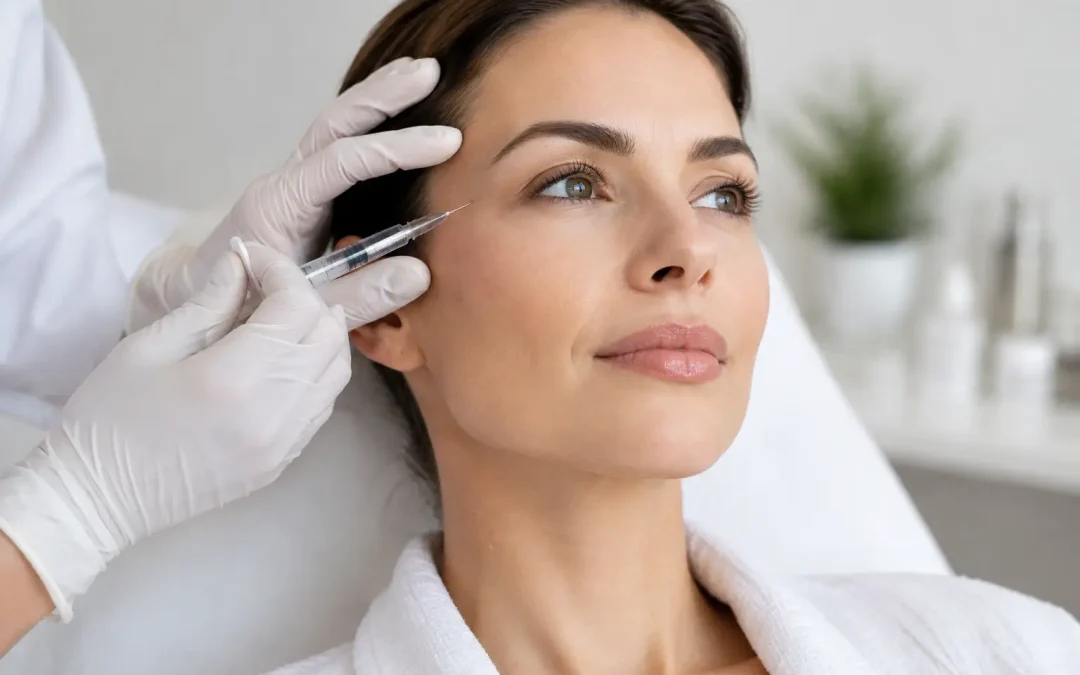
Expression lines are part of a life well lived, but they do not have to be the first thing you notice when you look in the mirror. This guide to injectable wrinkle relaxers explains how these popular treatments soften certain facial lines while preserving the expressions that make you look like yourself.
Injectable wrinkle relaxers can be a thoughtful option for adults who want refreshed, natural-looking results without surgery or lengthy downtime. The right plan is never about chasing a frozen look. It is about understanding your facial movement, your skin, and the features you want to keep beautifully your own.
What are injectable wrinkle relaxers?
Injectable wrinkle relaxers are prescription neuromodulators that temporarily reduce activity in selected facial muscles. When a muscle contracts less strongly, the skin above it has a chance to lie smoother. This can soften the lines caused by repeated movements such as squinting, frowning, raising your brows, or smiling.
You may recognize names such as Botox Cosmetic, Dysport, Xeomin, and Jeuveau. Each is a form of botulinum toxin type A, but products can differ in how they are formulated, dosed, and used. A qualified provider can help determine which option best fits your treatment area, facial anatomy, history, and goals.
These treatments work differently from dermal fillers. Wrinkle relaxers address movement by calming targeted muscles. Fillers add or restore volume in areas such as the cheeks, lips, jawline, and folds around the mouth. Many clients benefit from one approach, while others see the most balanced result from a carefully planned combination.
Where wrinkle relaxers can help
The most familiar treatment areas are the upper face. Horizontal forehead lines, the vertical “11 lines” between the brows, and crow’s feet at the outer corners of the eyes are common concerns. These areas often respond well because the lines are closely tied to muscle movement.
Depending on the individual, a trained injector may also use wrinkle relaxers for a subtle brow lift, bunny lines across the nose, chin dimpling, a downturned mouth, neck bands, or excessive sweating. Treatment in these areas requires a detailed understanding of anatomy and conservative technique. What looks beautiful on one face may not be appropriate for another.
A key distinction is whether a line is dynamic or static. Dynamic lines appear mainly when you move your face. Static lines remain visible even when your face is at rest. Relaxers can still improve the appearance of some static lines over time, especially when movement is reduced, but deep etched-in lines may also need skincare, resurfacing treatments, microneedling, filler, or another personalized recommendation.
What a natural result actually looks like
Natural does not mean that every muscle moves at full strength. It means the treatment respects facial balance and your personal preferences. Some clients want a very soft effect with plenty of brow and forehead movement. Others prefer a smoother finish for an upcoming event or a consistently polished appearance at work.
Your provider should ask what you see in the mirror, what has worked for you before, and how much movement feels right to you. They should also assess eyebrow position, eyelid heaviness, asymmetry, muscle strength, and the way your face moves when you speak and smile.
This assessment matters because more units are not automatically better. Over-treating the forehead, for example, can leave certain clients feeling too heavy around the brows. Under-treating may leave a result that fades sooner than expected or does not adequately soften the concern. Good injectable care is precise, not one-size-fits-all.
What happens at your appointment
Your first appointment should begin with a conversation, not a syringe. Share your goals, your medical history, allergies, current medications and supplements, prior cosmetic treatments, and any past experiences with neuromodulators. Be honest about upcoming events, because the final result is not immediate.
After reviewing your facial movement and treatment plan, your provider cleans the skin and places small injections into the selected muscles. Most appointments take only a few minutes once the plan is established. Clients often describe the feeling as a quick pinch or brief sting.
There is usually little to no downtime. Mild redness, pinpoint marks, swelling, tenderness, or bruising can occur and generally resolve quickly. If bruising would be especially inconvenient before a wedding, photos, or travel, schedule with a little extra cushion rather than waiting until the last minute.
Follow your provider’s aftercare instructions closely. In many cases, that includes staying upright for several hours, avoiding rubbing or massaging the treated area, and postponing strenuous exercise for the period your provider recommends. Your specific instructions matter more than general advice online.
When results appear and how long they last
Most clients begin to notice a change within several days. Results commonly continue developing over about 10 to 14 days, which is why a two-week follow-up window is often useful when one is needed. Do not judge the outcome the morning after treatment.
For many people, results last around three to four months. Metabolism, muscle strength, dosage, treatment area, and previous treatment history can all influence longevity. Some clients find that regular, appropriately spaced treatment helps them maintain a more consistent look, while others prefer to treat only before important occasions.
Starting earlier can also be preventive in a practical sense. By reducing repetitive folding of the skin, treatment may help keep dynamic lines from becoming as deeply set. It will not stop the natural aging process, and it should never be sold as a permanent solution. It is a temporary treatment that can be adjusted as your needs change.
Safety starts with the right provider
Neuromodulators are medical treatments, even when the appointment feels quick and simple. Choose a licensed, experienced provider who understands facial anatomy, uses authentic prescription products, and welcomes your questions. A thoughtful consultation should feel educational, not rushed or pressured.
Tell your provider if you are pregnant, breastfeeding, have a neurological or neuromuscular condition, have an infection at the planned injection site, or have had a previous reaction to a botulinum toxin product. Certain medications and supplements may affect bruising or treatment planning, so bring a complete list. Do not stop prescribed medication without guidance from the clinician who manages it.
Potential side effects can include temporary bruising, swelling, headache, unevenness, or unwanted weakness in a nearby muscle. More serious reactions are uncommon but require prompt medical attention. Proper placement, appropriate dosing, and clear follow-up guidance all help reduce risk.
How to plan treatment around your life
If you are preparing for a milestone event, allow at least two weeks before the date you want to look your best. This gives your result time to settle and leaves room for a provider-directed touch-up if it is appropriate. For first-time clients, planning even farther ahead can make the experience feel more relaxed.
Bring photos only if they help communicate your goal, not as a standard you feel pressured to copy. Lighting, filters, facial anatomy, and social media editing can create expectations that no treatment should promise to duplicate. Your best outcome is one that looks rested and harmonious in real life.
Cost should be discussed clearly before treatment. Pricing may be based on units, treatment areas, or a combination of both. A lower price is not always a better value if it means diluted products, inexperienced injection, or a plan that does not account for your individual muscle pattern. Ask what is included, how follow-up is handled, and what maintenance may look like over time.
Building a plan that supports your skin
Wrinkle relaxers can be part of a broader approach to healthy-looking skin, but they cannot replace daily sun protection, a consistent skincare routine, hydration, or sleep. For concerns like uneven tone, texture, acne scarring, and sun damage, your provider may recommend complementary services such as chemical peels, microneedling, laser or IPL treatments, or professional skincare.
At A Younger You Med Spa, treatment planning begins with listening. Whether you are new to injectables or returning for maintenance, the goal is compassionate, provider-guided care that fits your face, your comfort level, and your desired result.
The most reassuring next step is a personal consultation: bring your questions, describe what you would like to soften, and give yourself permission to choose a plan that helps you feel refreshed rather than changed.